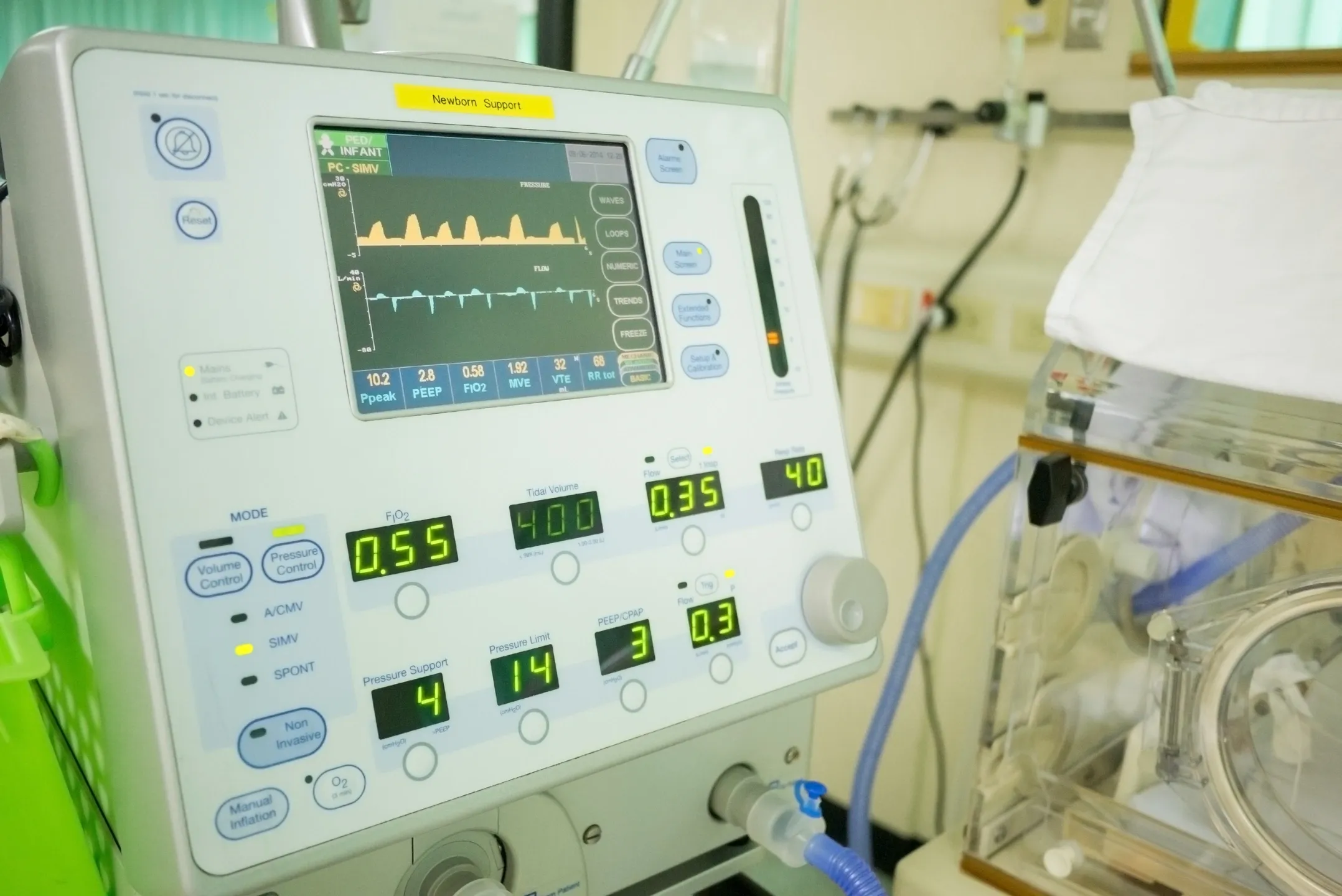
Extracorporeal Membrane Oxygenation (ECMO)—also referred to as Extracorporeal Life Support (ECLS)—is an advanced life-saving technique providing temporary respiratory and cardiac replacement for critically ill patients. In modern thoracic transplantation, ECMO has emerged as an indispensable cornerstone, keeping patients alive during catastrophic respiratory failure while awaiting compatible donor lungs.
What is ECMO and How Does It Work?
ECMO functions as an external artificial heart and lung system. Large-bore biocompatible cannulas are placed into major central blood vessels (typically the femoral and internal jugular veins). Deoxygenated, dark venous blood is continuously pumped out of the body into an extracorporeal polymethylpentene membrane oxygenator. Inside the membrane, hemoglobin absorbs fresh oxygen while carbon dioxide is efficiently swept away. The newly oxygenated, crimson blood is then warmed to 37°C and infused back into the body.
By substituting gas exchange outside the chest, ECMO relieves failing lungs from the devastating barotrauma and oxygen toxicity caused by high-pressure mechanical ventilation, giving tissues time to stabilize or bridge to surgical transplantation.
Types of ECMO: VV vs. VA Configuration
Depending on the patient's underlying hemodynamic and clinical state, ECMO is deployed in one of two primary configurations:
- Veno-Venous (VV) ECMO: Blood is drained from a large vein (e.g., femoral vein) and returned to another vein (e.g., internal jugular vein or right atrium). Because the patient’s native heart continues pumping blood through the circulatory system, VV-ECMO provides pure respiratory support. It is the primary modality used for terminal lung diseases (ILD, COPD, ARDS, cystic fibrosis) bridging to lung transplantation.
- Veno-Arterial (VA) ECMO: Blood is drained from the venous system and returned directly into an arterial vessel (e.g., femoral or axillary artery). VA-ECMO provides both full respiratory gas exchange and systemic circulatory pressure support, utilized when respiratory collapse is complicated by cardiogenic shock, severe right ventricular failure, or cardiac arrest.
Clinical Perspective: ECMO in Thoracic Transplantation
"ECMO is the ultimate bridge in thoracic medicine. It converts what would historically be a fatal terminal crisis into a viable window of stability, enabling us to deliver patient candidates safely to donor lung transplantation." — Dr. Pavan Yadav M.V.
Clinical Indications: Bridge to Recovery vs. Bridge to Transplant
At KIMS Super Speciality Hospital Bangalore, ECMO is deployed strategically based on clinical reversibility:
- Bridge to Recovery: Applied in acute, potentially reversible pulmonary insults—such as severe Acute Respiratory Distress Syndrome (ARDS), severe viral or bacterial pneumonia, massive chest trauma, or acute myocarditis. ECMO rests the injured organs, allowing medications and biological healing to restore native function.
- Bridge to Transplantation: Applied when patients with irreversible end-stage respiratory failure (such as rapidly progressive Idiopathic Pulmonary Fibrosis or terminal COPD) deteriorate acutely while on the organ waitlist. Without ECMO, these patients would succumb to hypoxemic arrest before an organ match. ECMO stabilizes multi-organ perfusion, preserves renal and cerebral function, and allows light physical therapy while awaiting donor allocation.
- Intraoperative and Postoperative Support: ECMO is frequently employed during lung transplant implantation instead of traditional full cardiopulmonary bypass, minimizing systemic heparinization, bleeding risks, and inflammatory cascade activation—frequently in synergy with Ex-Vivo Lung Perfusion (EVLP) donor organ optimization.
ECMO Patient Management & Critical Care Principles
Managing an ECMO patient requires 24/7 bedside critical care expertise led by ECMO specialists and perfusion teams:
- Systemic Anticoagulation: Blood exposure to artificial tubing triggers clotting pathways. Patients receive titrated unfractionated heparin with continuous monitoring of Activated Clotting Time (ACT) or anti-Factor Xa levels to prevent circuit thrombosis without provoking major internal bleeding.
- Lung-Rest Ventilation: Mechanical ventilator settings are dialed down to ultralow tidal volumes (3-4 mL/kg) and low airway pressures (Pplat < 25 cmH2O), preventing mechanical stretch injury.
- Awake ECMO and Rehabilitation: Where possible, patients are kept alert and gently mobilized. "Awake ECMO" preserves peripheral skeletal muscle strength, shortens post-transplant ventilation time, and improves long-term rehabilitation outcomes.
The ECMO Weaning and Decannulation Process
Weaning is executed systematically once pulmonary recovery or new graft function is demonstrated:
- Physiological Assessment: Confirmed clinical stability, clear chest radiography, normalized compliance, and absence of uncontrollable sepsis or severe acid-base disturbance.
- Gradual Sweep Gas Reduction: The fresh gas flow through the membrane is slowly decreased, and the patient's native lungs assume carbon dioxide elimination.
- Trail Off (Off-Sweep Test): The sweep gas is turned off completely while the patient remains on circuit flow, verifying that the lungs independently maintain acceptable PaO2 (> 70-80 mmHg) and PaCO2 (< 45-50 mmHg) under modest ventilator settings.
- Safe Decannulation: Cannulas are carefully removed under direct visualization, vascular access is repaired or closed with purse-string sutures, and the patient continues on structured respiratory rehabilitation.
For candidate evaluation, donor allocation criteria, and hospital stay timelines, see our comprehensive Complete Guide to Lung Transplant in Bangalore.
Frequently Asked Questions About ECMO Life Support
What is the difference between VV-ECMO and VA-ECMO?
Veno-Venous (VV) ECMO provides respiratory support only, extracting and returning blood to the venous system while relying on the patient's own heart to pump blood to organs. Veno-Arterial (VA) ECMO drains venous blood and pumps it into the arterial system, replacing both lung gas exchange and heart pumping function in combined cardiopulmonary collapse.
How does ECMO function as a life-saving bridge to lung transplantation?
When a registered transplant candidate develops sudden life-threatening respiratory collapse that mechanical ventilators cannot correct, ECMO is initiated to oxygenate blood externally. This sustains vital organs without causing lung tissue trauma, buying precious days or weeks until a compatible donor organ is matched and retrieved.
How is a patient safely weaned off ECMO support?
Weaning involves systematically decreasing the sweep gas flow to allow native or transplanted lungs to take over carbon dioxide clearance and oxygen delivery. Once serial arterial blood gas readings and lung mechanics prove the lungs can function independently on minimal ventilatory settings, the circuit is clamped and cannulas are safely decannulated.